
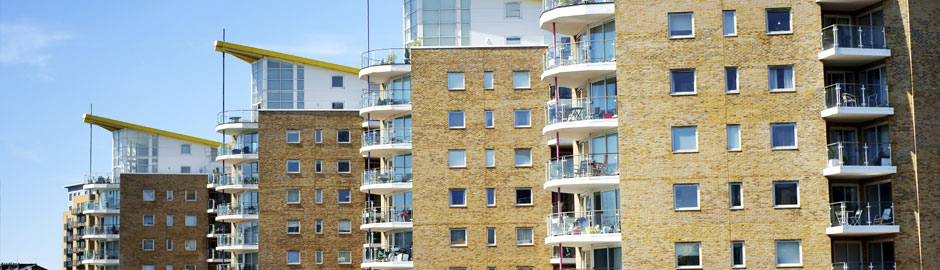
A Century of Change for the UK housing market

Lease SignHome ownership has fallen for the first time in almost a century according to the Office of National Statistics, who has recently published a report based on information gathered during the 2011 Census.

In 1918, three-quarters of Britons rented. Home ownership was the preserve of the wealthy few. After the Second World War, the percentage of people owning their homes started to steadily increase. Rising wages meant that home ownership started to become something that many more could aspire to. By 1971, 50% owned their own homes. The huge council house building programme that took place between the 1950s and 1970s meant that by 1981, nearly a third of Britons were in social housing. The private rented sector was shrinking. Continue reading

Benefit cap trial begins

money for housingThe government’s much-talked about benefits cap is being trialled from this week in parts of London. From Monday 15th April, people receiving benefits in Haringey, Ealing, Croydon and Bromley have had them capped at £500 a week, or £350 for a single person.

Those receiving benefits at above those amounts are likely to be living in areas where rents are high. A large part of their benefits will housing benefit. If someone is over the cap, it is their housing benefit that will be reduced.

That means that the cap puts many landlords at risk of arrears. Continue reading

Solve housing crisis by building on land


The Planning Minister Nick Boles has stipulated that there needs to be more development of open land to ease the housing shortage. To construct on a further 2-3% of English land would put an end to the housing problem for some time to come.

“Beautiful Housing”

Part of the problem has been that housing projects of the past (and present) have been aesthetically displeasing – in other words, downright ugly. To endear himself to those who are set on stopping any development, Boles has pledged that future housing will be “beautiful” and be designed to be sensitive to its local surroundings. Boles described current housing projects as “ugly rubbish” and that a significant improvement in design may be key in persuading people that building developments are not necessarily a bad thing. He argued that “The built environment can be more beautiful than nature and we shouldn’t obsess about the fact that the only landscapes that are beautiful are open – sometimes buildings are better.”

Gardens and Greenbelts

The greenbelt will not be targeted, as Boles has also pledged to protect greenbelt land from development. Indeed, greenbelt commitments will be made in exchange for permission to build on open land. He said “We’re going to protect the greenbelt” but emphasized if people wanted housing for the next generation they would need to “accept we need to build more on some open land.”

On Gardens, Boles said that they were a “basic moral right, like healthcare and education.” Gardens are crucial for educational development and many children benefit hugely from being able to run and play in open areas safely. If more houses aren’t built there won’t be any gardens for future generations. We can fully expect our children and our children’s children to become excessively digitalised to the extent where health, social skills and traditional values are compromised – something which would be further exacerbated by the lack of open land.

Certainly, Boles has brought up some interesting points and creating a set of aesthetically pleasing developments could be a feasible solution, but whether it’s realistic is another matter. Property insurance providers will however look forward to the new business opportunities!

New homes still in short supply

The fragility of the housing market outside of London is still very much a concern for those in the industry and more importantly for those looking to find decent accommodation in which to live. The recent figures released by The National House Building Council (NHBC) illustrates amply the problems prospective home buyers are facing and how vital it is for property investors with an interest in landlords insurance to expand their portfolios.

Not enough new builds

While sales of established properties at least appear to be holding steady, a chronic under supply in new properties is continuing to harm the housing market. In Wales, where housing needs are getting desperate, there have been a number of new homes built and covered by homeowners insurance in the last three months, but many more are needed to meet what seems to be an ever increasing demand. According to the National House Building Council there were 1200 homes built in the last three months but this is only a small percentage of the number actually needed.

It is not just a problem for Wales as throughout the United Kingdom the number of new homes that have been registered with NHBC has dropped compared with the same time period year

Who will buy the homes?

Only last week the Government announced that it was looking to see almost a quarter of a million new homes built every year for the next 4 years. This it said would ease the burden on local authorities, councils and the private buyer. Where the homes will be built and by whom is still far from clear. Housing associations have been informed as to whether their bids for Government funding for building new homes have been successful but builders are still uncertain as to how the Green Deal and other regulations will impact on their building plans. And of course the other uncertainty is who will buy the homes aimed at the private sector. Many more landlords will fancy the opportunities to grow their business if the conditions are right and they may need to, if banks don’t help private homebuyers.

Market dependant on Landlords

The NHBC feel the coalition needs to remain strong on its current policy as well as being prepared for further assertive action if it becomes clear that house building is getting to a perilously low level. In recent months the UK property market has been drowning in the negative publicity of low interest rates and the low supply of realistically priced homes. The property market still has stiff challenges ahead for the rest of this year and probably the whole of 2012. The outlook remains uncertain but, with the UK economic recovery expected to remain sluggish landlords may have a big role to play in housing the residents of the UK.

Record fines await illegal landlords

Residential landlords in London and Glasgow, two of the UK’s largest cities, have been warned that local authorities are no longer prepared to put up with non compliance over registration schemes and that rogue landlords will be hunted down and brought before the courts.

Good relationships work best

Of course the great majority of landlords across the UK are highly respected businesspersons who look after their properties as one would expect. A costly investment needs protection, not only in the guise of landlord insurance but also in maintenance, and décor, something achieved best by having an excellent relationship with their tenant. Many local authorities encourage even better relationships between landlord and tenant by requiring property owners to register with them so they can ascertain they are fit and proper persons to rent out property. The schemes work well for landlords and tenants in many of Britain’s towns and cities.

Majority of landlords support council scheme

In Glasgow 80% of the cities private landlords have signed up to a scheme which requires them to register with the local council and provide tenants with a certain level of accommodation. The scheme has been in operation for over 6 years and although landlords who have signed up to the scheme have no problem with the scheme itself they have been concerned over the councils lack of action with the 6,000 landlords who have not signed up to a scheme that was supposed to be compulsory. At long last the council appear to have listened to landlord organisations and have stepped up their efforts to track down the illegal traders.

Fine increased ten fold

The council, with the support of the Scottish Landlords Association, have now upped the maximum fine for not registering with the scheme to £50,000, ten times higher than it was before. They are collating evidence of properties not already registered to the scheme and preparing to take the landlords to court.

Website will collect information on rogue landlords

Further south in London, Ken Livingstone a candidate for the upcoming Mayoral elections has pledged that private landlords who don’t offer acceptable levels of accommodation to their tenants will be looking for empty property insurance if he is elected. He has pledged to eradicate bad practice from the rented sector altogether saying Londoners deserve a better deal. Mr Livingstone has set up a website encouraging tenants to report the many “housing horror stories” he says he hears about constantly. He promises to closely monitor the 1 in 4 homes in London that are rented out via the private sector and says that too many people are paying exorbitant prices for accommodation that in many cases is not at an acceptable level.